

Can a variable - displacement hydraulic pump motor adjust its flow rate automatically?
As a supplier of hydraulic pump motors, I'm often asked about the capabilities of variable - displacement hydraulic pump motors, especially regarding their ability to adjust the flow rate automatically. In this blog post, I'll delve into this topic, exploring the principles behind variable - displacement technology, how automatic flow rate adjustment works, and the practical applications of this feature.
Understanding Variable - Displacement Hydraulic Pump Motors
Before we discuss automatic flow rate adjustment, it's essential to understand what a variable - displacement hydraulic pump motor is. Unlike fixed - displacement pumps, which deliver a constant flow rate regardless of the system's requirements, variable - displacement pumps can change the volume of fluid they displace per revolution.
The basic working principle of a variable - displacement pump involves altering the geometry of the pumping chamber. For example, in a piston pump, the stroke length of the pistons can be adjusted. By changing the stroke length, the amount of fluid drawn in and expelled with each piston movement can be varied. This flexibility allows the pump to adapt to different operating conditions.
How Automatic Flow Rate Adjustment Works
A variable - displacement hydraulic pump motor can adjust its flow rate automatically through several control mechanisms. One common method is pressure - compensated control. In this system, the pump is equipped with a pressure - sensing device. When the system pressure rises above a pre - set level, the control mechanism reduces the displacement of the pump. As a result, the flow rate decreases, preventing excessive pressure build - up in the system.
Conversely, if the system pressure drops below the setpoint, the control mechanism increases the pump's displacement, thereby increasing the flow rate. This self - regulating process ensures that the system maintains a relatively constant pressure, even when the load on the hydraulic system fluctuates.
Another approach to automatic flow rate adjustment is load - sensing control. In load - sensing systems, the pump is designed to match the flow rate to the requirements of the hydraulic actuators. The system uses sensors to detect the pressure and flow requirements of the load. Based on this information, the control system adjusts the pump's displacement to provide the necessary flow rate. This ensures efficient energy usage, as the pump only delivers as much fluid as is needed by the system.
Practical Applications
The ability of variable - displacement hydraulic pump motors to adjust the flow rate automatically has numerous practical applications. In the construction industry, for example, hydraulic systems are used in equipment such as Telescopic Boom Lift Counterbalance Valve. These valves are crucial for maintaining the stability and safety of telescopic boom lifts. A variable - displacement pump motor with automatic flow rate adjustment can ensure that the hydraulic system provides the right amount of fluid to operate the lift smoothly, regardless of the load or the position of the boom.
In the manufacturing sector, hydraulic presses often rely on variable - displacement pumps. The automatic flow rate adjustment feature allows the press to apply the appropriate force during different stages of the manufacturing process. For instance, during the initial contact with the workpiece, a higher flow rate may be required to quickly move the press ram. Once the desired pressure is reached, the flow rate can be reduced to maintain the pressure without wasting energy.
In mobile machinery, such as agricultural tractors and forklifts, variable - displacement pumps with automatic flow control are used to power various hydraulic functions. These functions may include steering, lifting, and tilting. The ability to adjust the flow rate according to the load ensures that the machinery operates efficiently and smoothly, improving the overall productivity and user experience.
Advantages of Automatic Flow Rate Adjustment
There are several advantages to using variable - displacement hydraulic pump motors with automatic flow rate adjustment. Firstly, it improves energy efficiency. By delivering only the necessary amount of fluid, the pump reduces energy consumption, which is not only cost - effective but also environmentally friendly.
Secondly, it enhances system performance. The automatic adjustment ensures that the hydraulic system responds quickly to changes in load, providing smooth and precise operation. This is particularly important in applications where accuracy and reliability are critical, such as in aerospace and medical equipment.
Thirdly, it extends the lifespan of the hydraulic components. By maintaining optimal operating conditions and reducing stress on the system, automatic flow rate adjustment helps to prevent premature wear and tear of the pump, valves, and other components.
Related Hydraulic Components
In addition to variable - displacement hydraulic pump motors, other important hydraulic components work in conjunction with them. For example, Shuttle Valve is used to select the higher - pressure source in a hydraulic system. This valve ensures that the system always receives the appropriate pressure, which is essential for the proper functioning of the variable - displacement pump.
Hydraulic Boom is another key component in many hydraulic systems. It is used to provide the necessary mechanical movement, and the variable - displacement pump ensures that the boom can be operated smoothly and efficiently.
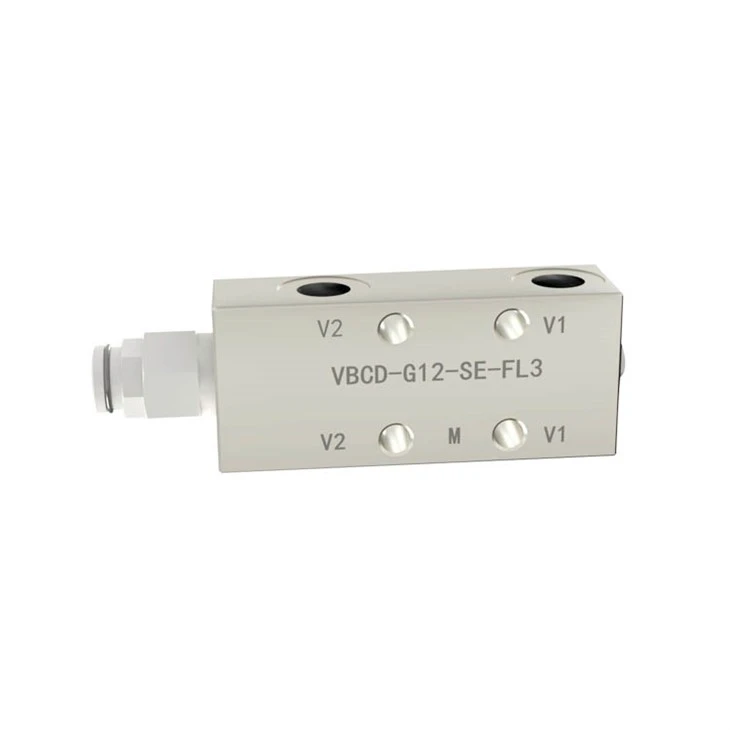
Hydraulic Cylinder Load Holding Valve Vbcd is designed to hold the load in place when the hydraulic system is not actively moving the cylinder. The variable - displacement pump motor's ability to adjust the flow rate allows the load - holding valve to function more effectively.
Hydraulic Motor Parts Overcenter Valve is used to control the direction and speed of the hydraulic motor. The automatic flow rate adjustment of the variable - displacement pump can work in harmony with the overcenter valve to provide precise control of the motor.
Conclusion
In conclusion, a variable - displacement hydraulic pump motor can indeed adjust its flow rate automatically through various control mechanisms such as pressure - compensated control and load - sensing control. This feature offers significant advantages in terms of energy efficiency, system performance, and component lifespan. It has a wide range of applications in different industries, from construction to manufacturing and mobile machinery.
If you are interested in purchasing high - quality hydraulic pump motors or any of the related hydraulic components mentioned in this blog, we are here to assist you. Our products are designed to meet the highest standards of quality and performance. Contact us for more information and to start a procurement discussion.

References
- Fluid Power Handbook, Third Edition. Pearson Education.
- Hydraulic and Pneumatic Technology, Fifth Edition. Delmar Cengage Learning.


