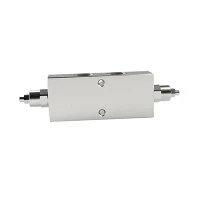
Hey there! As a supplier of hydraulic components, I've seen firsthand the amazing process of how a hydraulic motor converts hydraulic energy into mechanical energy. It's a pretty cool and complex mechanism that powers all sorts of machinery, from construction equipment to industrial robots. So, let's dive in and explore this fascinating topic!
The Basics of Hydraulic Systems
Before we get into how a hydraulic motor works, let's quickly go over the basics of hydraulic systems. A hydraulic system uses a fluid, usually oil, to transmit power from one point to another. It consists of a few key components: a hydraulic pump, a hydraulic motor, valves, and hydraulic fluid.
The hydraulic pump is responsible for creating the flow of hydraulic fluid. It takes in mechanical energy, usually from an engine or an electric motor, and converts it into hydraulic energy by pressurizing the fluid. This pressurized fluid then travels through the hydraulic lines to the hydraulic motor.
How a Hydraulic Motor Works
Now, let's focus on the star of the show: the hydraulic motor. A hydraulic motor is a device that converts hydraulic energy into mechanical energy. It does this through a series of mechanical and fluid - dynamic processes.
There are different types of hydraulic motors, such as gear motors, vane motors, and piston motors. Each type has its own unique design and way of converting energy, but the basic principle is the same.
Gear Motors
Gear motors are one of the simplest types of hydraulic motors. They consist of two meshing gears, an input gear and an output gear, enclosed in a housing. When the pressurized hydraulic fluid enters the motor, it pushes against the teeth of the gears. The force exerted by the fluid causes the gears to rotate. As the gears rotate, they transfer the mechanical energy to the output shaft, which can then be used to drive other components in the machinery.
Gear motors are known for their simplicity, reliability, and relatively low cost. However, they may not be as efficient as other types of hydraulic motors, especially at high pressures.
Vane Motors
Vane motors are another common type of hydraulic motor. They have a rotor with several vanes that slide in and out of slots in the rotor. The rotor is located inside a cam ring. When the pressurized hydraulic fluid enters the motor, it pushes the vanes outwards against the cam ring. This creates a force that causes the rotor to rotate.
Vane motors are more efficient than gear motors, especially at medium pressures. They also have a smoother operation and can handle higher - speed applications.
Piston Motors
Piston motors are the most complex and efficient type of hydraulic motor. They come in two main types: axial piston motors and radial piston motors.
In an axial piston motor, the pistons are arranged parallel to the axis of the motor's shaft. The pressurized hydraulic fluid enters the motor and acts on the pistons, causing them to move back and forth. This reciprocating motion is converted into rotational motion through a swashplate or a wobble plate mechanism.
Radial piston motors, on the other hand, have pistons arranged radially around the motor's shaft. The pressurized fluid acts on the pistons, pushing them outwards and causing the rotor to rotate.
Piston motors are capable of high - torque and high - speed operation. They are commonly used in heavy - duty applications, such as construction equipment and industrial machinery.
The Role of Hydraulic Valves
Hydraulic valves play a crucial role in the operation of a hydraulic motor. They control the flow, pressure, and direction of the hydraulic fluid. For example, directional control valves determine which way the fluid flows in the system, allowing the motor to rotate in different directions.
At our company, we offer a range of high - quality hydraulic valves, such as the P40 Hydraulic Multi - way Valve 40L/min. This valve is designed to provide precise control of the hydraulic fluid flow, ensuring smooth and efficient operation of the hydraulic motor.
We also have the P40 Series Monoblock Directional Control Valves Hydraulic Multiway Valve, which is known for its durability and reliability. And the P40 /P80 /P120 Series Monoblock Valves offer a wide range of flow rates and pressure ratings to meet different application requirements.
Efficiency and Maintenance
The efficiency of a hydraulic motor is an important factor to consider. Efficiency is affected by several factors, including the type of motor, the quality of the components, and the operating conditions. A more efficient motor will convert more of the hydraulic energy into mechanical energy, reducing energy waste and operating costs.
Proper maintenance is also crucial for the long - term performance of a hydraulic motor. Regularly checking the hydraulic fluid level and quality, inspecting the seals and hoses for leaks, and ensuring that the valves are functioning properly can help prevent breakdowns and extend the life of the motor.
Conclusion
So, there you have it! That's how a hydraulic motor converts hydraulic energy into mechanical energy. It's a complex but fascinating process that powers many of the machines we use every day.
If you're in the market for high - quality hydraulic components, including hydraulic motors and valves, we'd love to hear from you. Whether you're working on a small - scale project or a large - scale industrial application, we have the products and expertise to meet your needs. Contact us to start a procurement discussion and find the perfect hydraulic solutions for your business.


References
- "Hydraulic Systems and Components" by John F. Dini
- "Fluid Power Technology" by Arthur R. Slocum