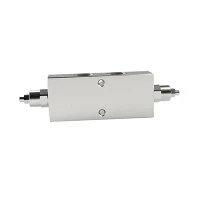
In low - pressure systems, pressure check valves play a crucial and often underestimated role. As a pressure check valve supplier, I've witnessed firsthand how these components ensure the smooth and safe operation of various low - pressure applications. In this blog, we'll delve into the working principles of pressure check valves in low - pressure systems, exploring their significance, mechanics, and common applications.
Understanding the Basics of Pressure Check Valves
A pressure check valve is a type of one - way valve that allows fluid (either liquid or gas) to flow in one direction only. It uses pressure differentials to control the flow of the medium. In a low - pressure system, where the pressure is relatively mild compared to high - pressure industrial settings, these valves are designed to operate under conditions that typically range from a few psi (pounds per square inch) to a couple of hundred psi.
The main components of a pressure check valve include a valve seat, a disc or ball, and a spring (in some designs). The valve seat is the area where the disc or ball seals against to prevent reverse flow. When the pressure of the fluid in the inlet side of the valve exceeds the pressure on the outlet side by a certain amount (known as the cracking pressure), the disc or ball is pushed off the seat, allowing fluid to pass through the valve.
How Pressure Check Valves Work in Low - Pressure Systems
Let's break down the working process of pressure check valves in low - pressure systems into a step - by - step explanation.
Initial State
In its initial state, when there is no significant pressure difference between the inlet and the outlet, the valve is in a closed position. The disc or ball is firmly seated against the valve seat, usually held in place by a weak spring or by the pressure on the outlet side. In low - pressure systems, the spring is often designed with a low stiffness so that it can be easily overcome by a small pressure differential.
Fluid Inlet and Pressure Build - up
As fluid enters the valve from the inlet side, the pressure starts to build up. When the inlet pressure is slightly higher than the outlet pressure plus the spring force (in spring - loaded valves), the valve begins to open. The cracking pressure is the minimum pressure required to start the valve opening. For low - pressure systems, this cracking pressure can be as low as 0.5 psi, depending on the application and valve design.
Fluid Flow
Once the valve is open, the fluid can flow freely from the inlet to the outlet. The valve allows the fluid to pass through with minimal resistance, ensuring an efficient flow. The rate of flow depends on factors such as the valve size, the pressure differential, and the viscosity of the fluid. In low - pressure systems, the flow rate is generally lower compared to high - pressure systems, but it is still sufficient for the intended application.
Preventing Backflow
One of the key functions of a pressure check valve in a low - pressure system is to prevent backflow. If the pressure on the outlet side suddenly becomes higher than the inlet pressure, the valve will immediately close. The disc or ball will be forced back onto the valve seat, creating a tight seal. This prevents the fluid from flowing in the reverse direction, which could potentially damage the system or disrupt its operation.
Significance of Pressure Check Valves in Low - Pressure Systems
Pressure check valves bring several important benefits to low - pressure systems.


System Protection
They protect the system from potential damage caused by backflow. For example, in a low - pressure water supply system, a check valve can prevent contaminated water from flowing back into the clean water supply. This is crucial for maintaining the quality and safety of the water.
Maintaining Flow Direction
Pressure check valves ensure that the fluid flows in the intended direction. In a low - pressure hydraulic system, proper flow direction is essential for the correct operation of hydraulic cylinders or other components. If the fluid were to flow in the wrong direction, it could cause erratic movement or even system failure.
Reducing Energy Loss
By preventing backflow, pressure check valves help to reduce energy loss in the system. In a low - pressure piped gas system, energy is wasted if the gas flows backward. The check valve allows the gas to flow forward efficiently, ensuring that the energy is used effectively.
Common Applications of Pressure Check Valves in Low - Pressure Systems
Domestic Water Systems
In residential water supply systems, pressure check valves are commonly used at various points. For instance, they are installed at the inlet of water heaters to prevent hot water from flowing back into the cold - water supply lines. This helps to maintain the temperature and pressure in the hot - water system effectively.
Low - Pressure Air Compressor Systems
In air compressor systems operating at low pressures, check valves are used to prevent the compressed air from flowing back into the compressor when it is turned off. This keeps the system stable and reduces the wear and tear on the compressor.
Small - Scale Industrial Processes
Many small - scale industrial processes involve low - pressure fluid handling. For example, in a chemical mixing process where the pressure is relatively low, pressure check valves are used to ensure that different chemicals are mixed in the correct order by controlling the flow direction.
Related Products in Our Catalog
As a pressure check valve supplier, we also offer related products that can complement your low - pressure systems. You can explore National Crane Parts, which are designed to work in harmony with our pressure check valves in certain crane - related low - pressure applications. Our Cylinder Balance Valve can also be used in conjunction with check valves to enhance the performance of hydraulic cylinders in low - pressure systems. And for those working with excavators in low - pressure setups, our Motor Overcenter Valve For Excavator can provide additional control and safety features.
Why Choose Our Pressure Check Valves
Our pressure check valves are engineered to meet the specific requirements of low - pressure systems. They are made from high - quality materials that ensure durability and reliable performance even under continuous operation. We have a team of experts who can provide technical support and customize the valves according to your unique needs.
Contact Us for Procurement
If you are in need of pressure check valves for your low - pressure systems or want to learn more about our products, we encourage you to reach out to us. Our sales team is ready to assist you in choosing the right valves and negotiating the best prices. Whether you are a small - scale business or a large industrial enterprise, we have the solutions to meet your pressure check valve needs.
References
- Fluid Power Systems, by Paul R. Heisler
- Handbook of Valves, by Ronald J. O'Brien