

As a leading supplier of pressure check valves, I often encounter inquiries from customers about the differences between direct-acting pressure check valves and pilot-operated pressure check valves. Understanding these differences is crucial for selecting the right valve for specific applications. In this blog post, I will delve into the characteristics, working principles, advantages, and disadvantages of both types of valves to help you make an informed decision.
Direct - Acting Pressure Check Valves
Working Principle
A direct-acting pressure check valve operates based on a simple mechanical principle. It consists of a valve seat, a poppet or ball, and a spring. The spring exerts a pre - set force on the poppet or ball, holding it against the valve seat. When the inlet pressure exceeds the spring force, the poppet or ball is lifted off the seat, allowing fluid to flow through the valve. Conversely, when the inlet pressure drops below the spring - set pressure, the poppet or ball is forced back onto the seat by the spring, preventing reverse flow.
Characteristics
- Simplicity: Direct - acting valves have a relatively simple design with fewer components. This simplicity makes them easy to understand, install, and maintain.
- Fast Response: They can respond quickly to changes in pressure. Since there are no additional pilot circuits or complex mechanisms involved, the valve can open and close almost instantaneously when the pressure reaches the set point.
- Low - Flow Applications: These valves are typically more suitable for low - flow and low - pressure applications. The spring force limits the maximum flow rate that the valve can handle effectively.
Advantages
- Cost - Effective: Due to their simple design, direct - acting pressure check valves are generally less expensive to manufacture and purchase compared to pilot - operated valves.
- Reliability: With fewer components, there is less chance of mechanical failure. They are known for their long - term reliability in stable operating conditions.
Disadvantages
- Limited Pressure Capacity: The spring - based design restricts the maximum pressure that the valve can handle. For high - pressure applications, the spring would need to be extremely strong, which can lead to problems with valve sizing and responsiveness.
- Poor Flow Characteristics at High Flow Rates: As the flow rate increases, the valve may experience instability and excessive pressure drops. This can result in inefficient operation and potential damage to the system.
Pilot - Operated Pressure Check Valves
Working Principle
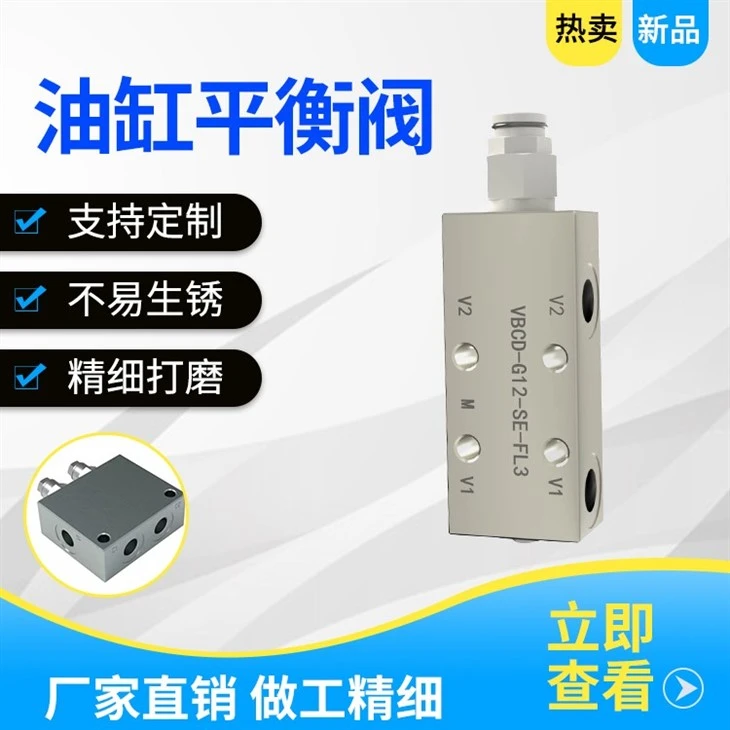
A pilot - operated pressure check valve uses a small pilot valve to control the opening and closing of the main valve. The pilot valve is actuated by a small amount of fluid pressure from the system. When the pilot pressure reaches a certain level, it overcomes the force holding the main valve closed, allowing the main valve to open and fluid to flow. The pilot circuit provides a means of amplifying the control force, enabling the valve to handle higher pressures and flow rates.

Characteristics
- High - Pressure and High - Flow Capability: Pilot - operated valves are capable of handling much higher pressures and flow rates than direct - acting valves. The pilot circuit allows for a more efficient control of the main valve, even under extreme conditions.
- Precise Control: They offer more precise control over the opening and closing pressures. The pilot valve can be adjusted to fine - tune the operating characteristics of the main valve.
- Complexity: The design of pilot - operated valves is more complex than direct - acting valves. They require additional components such as pilot lines, orifices, and control chambers.
Advantages
- High - Performance: Ideal for high - pressure and high - flow applications found in industrial machinery, hydraulic systems, and power plants.
- Flexibility: The pilot circuit can be configured in different ways to meet specific application requirements, such as pressure relief, flow control, or reverse flow prevention.
Disadvantages
- Higher Cost: The additional components and complexity of the design make pilot - operated pressure check valves more expensive than direct - acting valves.
- Maintenance Requirements: The complex design also means that these valves require more frequent maintenance and troubleshooting. Any issues with the pilot circuit can affect the performance of the main valve.
Application Considerations
When choosing between a direct - acting and a pilot - operated pressure check valve, several factors need to be considered:
- Pressure and Flow Requirements: If the application involves low pressure and low flow rates, a direct - acting valve may be sufficient. However, for high - pressure and high - flow applications, a pilot - operated valve is usually the better choice.
- System Complexity: In simple systems where quick response and low cost are priorities, a direct - acting valve is a good option. In more complex systems that require precise control and high performance, a pilot - operated valve is more appropriate.
- Budget: As mentioned earlier, direct - acting valves are generally more cost - effective. If budget is a major concern, a direct - acting valve may be the way to go.
Related Products in Our Catalog
As a pressure check valve supplier, we offer a wide range of valves to meet different customer needs. You can explore our related products:
- Yikde Hydraulic Control Valve Counterbalance Valve Supplier
- Overcenter Valve YKD
- Motor Overcenter Valve For Crane
- Hydraulic Counterbalance Valve Vbcd G12 - DE
- High Quality Hydraulic Pilot Check Valve Hydraulic Lock
Contact Us for Procurement
If you are in the market for pressure check valves and need further assistance in selecting the right type for your application, we are here to help. Our team of experts can provide detailed technical advice and support to ensure that you get the most suitable valve for your needs. Whether you require a direct - acting valve for a simple system or a pilot - operated valve for a high - performance application, we have the products and knowledge to meet your requirements. Reach out to us to start a discussion about your procurement needs.
References
- Fluid Power Handbook, various authors
- Hydraulic System Design and Analysis, industry - standard textbooks


