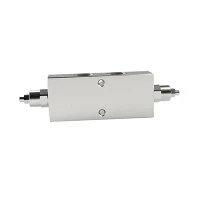
Hey there! As a safety relief valve supplier, I often get asked about what the overpressure of a safety relief valve is. So, I thought I'd take a moment to break it down and share some insights about this important topic.
Let's start with the basics. A safety relief valve is a crucial component in many industrial systems. Its main job is to protect equipment and personnel from the dangers of excessive pressure. When the pressure in a system goes beyond a certain set point, the safety relief valve kicks in and releases the excess pressure to prevent any potential damage or catastrophic failures.
Now, the overpressure of a safety relief valve refers to the amount by which the pressure in the system exceeds the valve's set pressure. In other words, it's the extra pressure that the valve has to handle to bring the system back to a safe operating level.
There are a few key factors that can affect the overpressure of a safety relief valve. One of the most important ones is the size and capacity of the valve. A valve that's too small for the system it's installed in may not be able to handle the excess pressure effectively, leading to higher overpressure levels. On the other hand, a valve that's too large can be costly and may not operate as efficiently as it should.
Another factor is the type of fluid or gas that the valve is dealing with. Different substances have different properties, such as density, viscosity, and compressibility, which can impact the way the valve responds to overpressure. For example, a valve designed for a liquid may not work as well with a gas, and vice versa.
The operating conditions of the system also play a role. Factors like temperature, flow rate, and pressure fluctuations can all affect the overpressure of the safety relief valve. In some cases, sudden changes in these conditions can cause the pressure to spike, putting additional stress on the valve.
So, why is it important to understand the overpressure of a safety relief valve? Well, for starters, it helps ensure the proper functioning of the valve. If the overpressure is too high, it can cause the valve to malfunction or even fail completely, which could lead to serious safety issues. By knowing the expected overpressure levels, engineers and operators can select the right valve for the job and make sure it's installed and maintained correctly.
It also helps with system design and optimization. By analyzing the overpressure requirements, designers can determine the appropriate size and type of valve needed for a particular application. This can lead to more efficient and cost-effective systems, as well as improved safety and reliability.
Now, let's talk about some of the common types of safety relief valves and how they handle overpressure.
One of the most widely used types is the spring-loaded safety relief valve. This valve uses a spring to hold the valve closed until the pressure in the system reaches the set point. When the pressure exceeds the set point, the spring is compressed, and the valve opens to release the excess pressure. The overpressure in a spring-loaded valve is typically limited by the design of the spring and the valve's seating arrangement.
Another type is the pilot-operated safety relief valve. This valve uses a pilot valve to control the opening and closing of the main valve. The pilot valve senses the pressure in the system and sends a signal to the main valve to open when the pressure reaches the set point. Pilot-operated valves can offer higher accuracy and better control of the overpressure compared to spring-loaded valves.


There are also other specialized types of safety relief valves, such as rupture disks and safety vents, which are used in specific applications where rapid pressure relief is required.
As a safety relief valve supplier, we offer a wide range of valves to meet the diverse needs of our customers. Whether you're looking for a standard spring-loaded valve or a more advanced pilot-operated valve, we've got you covered.
We also provide expert advice and support to help you select the right valve for your application. Our team of experienced engineers can analyze your system requirements and recommend the best valve solution based on factors like overpressure, flow rate, and operating conditions.
In addition to our standard product offerings, we also offer custom valve solutions for unique applications. If you have specific requirements or challenges, we can work with you to design and manufacture a valve that meets your exact needs.
Now, I'd like to mention a few related products that you might be interested in. We have a Hydraulic Double Overcenter Valve which is designed for use in hydraulic systems. This valve provides reliable pressure relief and control, making it an ideal choice for applications where precise pressure management is required.
We also offer a Motor Overcenter Valve For Crane. This valve is specifically designed for use in crane applications, where it helps to protect the hydraulic motor from overpressure and ensure smooth operation.
And if you're looking for a valve that's compatible with the Rexroth counterbalance valve system, we have a Rexroth Counterbalance Valve Same Vbcd System. This valve offers excellent performance and reliability, making it a great option for systems that require a high level of pressure control.
If you're in the market for a safety relief valve or any of our other products, I encourage you to get in touch with us. We'd be happy to discuss your requirements and provide you with a quote. Whether you're a small business or a large industrial operation, we have the expertise and resources to meet your needs.
In conclusion, understanding the overpressure of a safety relief valve is essential for ensuring the safety and reliability of industrial systems. By selecting the right valve and properly maintaining it, you can protect your equipment and personnel from the dangers of excessive pressure. And if you need any help or advice along the way, don't hesitate to reach out to us. We're here to support you every step of the way.
References
- "Pressure Relief Valve Handbook" by Dennis L. Olson
- "Safety Relief Valve Sizing, Selection, and Application" by Jack B. Carucci