Aerial work platforms (AWPs) have become indispensable tools in various industries, offering a safe and efficient way to access elevated work areas. One common question that arises is whether an aerial work platform can be used for signage installation. As a leading supplier of aerial work platforms, I'm here to explore this topic in detail and provide you with the information you need to make an informed decision.
The Suitability of Aerial Work Platforms for Signage Installation
Signage installation often requires workers to reach significant heights, whether it's mounting a large billboard on a building facade, installing storefront signs, or placing directional signs in public spaces. Aerial work platforms are well-suited for these tasks for several reasons:
1. Height Access
AWPs come in a variety of types and sizes, each capable of reaching different heights. From scissor lifts that can provide access to relatively low to medium heights to boom lifts that can extend to much greater elevations, there is an AWP available to meet the specific height requirements of any signage installation project. This flexibility allows installers to safely reach the exact location where the sign needs to be installed, regardless of how high it is.
2. Stability
Modern aerial work platforms are designed with stability in mind. They feature sturdy bases, outriggers (in the case of boom lifts), and advanced leveling systems that ensure a stable working platform even at full height. This stability is crucial for signage installation, as it allows workers to focus on the task at hand without having to worry about the platform shifting or swaying. Additionally, many AWPs are equipped with safety features such as hydraulic stabilizers and anti-tip devices to further enhance stability and prevent accidents.
3. Maneuverability
AWPs offer excellent maneuverability, allowing operators to position the platform precisely where it's needed. Boom lifts, in particular, can be articulated and telescoped to reach around obstacles and into tight spaces. This makes them ideal for signage installation in areas with limited access or complex building layouts. Scissor lifts, on the other hand, are known for their vertical lift capabilities and can be easily moved horizontally on a flat surface, making them suitable for installing signs on large, open facades.
4. Safety
Safety is a top priority in any construction or installation project, and aerial work platforms are designed with numerous safety features to protect workers. These features include guardrails, safety harness attachment points, emergency stop buttons, and overload protection systems. Additionally, operators are required to undergo comprehensive training before using an AWP, ensuring that they are familiar with the equipment's operation and safety procedures. By using an AWP for signage installation, companies can minimize the risk of accidents and injuries, protecting their workers and avoiding costly legal issues.
Types of Aerial Work Platforms for Signage Installation
There are several types of aerial work platforms that can be used for signage installation, each with its own advantages and limitations. Here are some of the most common types:
1. Scissor Lifts
Scissor lifts are a popular choice for signage installation projects that require access to relatively low to medium heights. They are characterized by their vertical lifting mechanism, which consists of a series of linked, folding supports that resemble a pair of scissors. Scissor lifts are typically used for installing signs on storefronts, interior walls, and other low-rise structures. They offer a large, stable platform and can be easily maneuvered on a flat surface.
2. Boom Lifts
Boom lifts are ideal for signage installation projects that require access to greater heights or more difficult-to-reach locations. They are available in two main types: articulating boom lifts and telescopic boom lifts. Articulating boom lifts feature a series of hinged sections that can be bent and rotated, allowing them to reach around obstacles and into tight spaces. Telescopic boom lifts, on the other hand, have a straight, extendable arm that can be telescoped to reach greater heights. Boom lifts are commonly used for installing signs on tall buildings, bridges, and other high-rise structures.
3. Spider Lifts
Spider lifts are a specialized type of aerial work platform that is designed for use in narrow or confined spaces. They are characterized by their compact size, lightweight design, and ability to access hard-to-reach areas. Spider lifts are often used for installing signs in historical buildings, museums, and other locations where traditional AWPs may not be able to fit. They are also suitable for outdoor signage installation in areas with uneven terrain or limited access.
Considerations for Using Aerial Work Platforms in Signage Installation
While aerial work platforms offer many benefits for signage installation, there are several factors that need to be considered before using them:
1. Site Conditions
Before selecting an AWP for a signage installation project, it's important to assess the site conditions. This includes factors such as the height of the sign, the location of the installation, the terrain, and any obstacles or hazards that may be present. For example, if the installation site is located on uneven ground or in an area with limited access, a spider lift or a boom lift with a high ground clearance may be more suitable.
2. Sign Size and Weight
The size and weight of the sign being installed will also affect the choice of AWP. Larger, heavier signs may require a more powerful and stable platform, such as a boom lift. It's important to ensure that the AWP has a sufficient weight capacity to safely support the sign and any tools or equipment that will be used during the installation process.
3. Weather Conditions
Weather conditions can have a significant impact on the safety and efficiency of signage installation using an AWP. Strong winds, rain, snow, or extreme temperatures can make it dangerous to operate an AWP at height. It's important to check the weather forecast before starting the installation and to avoid using an AWP in adverse weather conditions.
4. Operator Training and Certification
As mentioned earlier, operators of aerial work platforms are required to undergo comprehensive training and certification before using the equipment. This training should cover topics such as equipment operation, safety procedures, and emergency response. It's important to ensure that all operators are properly trained and certified to use the specific type of AWP being used for the signage installation project.
Our Aerial Work Platforms and Related Components
At our company, we offer a wide range of high-quality aerial work platforms suitable for signage installation. Our platforms are designed and manufactured to the highest standards of safety and reliability, ensuring that they can meet the demands of even the most challenging projects. In addition to our AWPs, we also offer a variety of related components and accessories to enhance the performance and safety of our equipment.
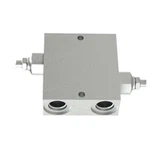
For example, we offer Hydraulic Buffer Valve, which helps to reduce the impact of sudden movements and vibrations, improving the stability and comfort of the platform. Our Safety Relief Valve Hydraulic Motor Buffer Valve Shc System provides additional protection against overpressure and hydraulic system failures, ensuring the safety of the operator and the equipment. And our Hydraulic Pressure Reducing Valve helps to maintain a consistent hydraulic pressure, ensuring smooth and efficient operation of the AWP.


Conclusion
In conclusion, aerial work platforms are an excellent choice for signage installation projects. They offer height access, stability, maneuverability, and safety, making them a reliable and efficient solution for installing signs at various heights and locations. By choosing the right type of AWP and considering the site conditions, sign size and weight, weather conditions, and operator training, companies can ensure a successful and safe signage installation project.
If you're in the market for an aerial work platform for your signage installation needs, we invite you to contact us for more information. Our team of experts can help you select the right equipment for your project and provide you with all the support and training you need to ensure its safe and effective use. We look forward to working with you to meet your aerial work platform needs.
References
- "Aerial Work Platforms: Safety and Best Practices," Occupational Safety and Health Administration (OSHA).
- "Guide to Aerial Work Platforms," International Powered Access Federation (IPAF).
- "Signage Installation Manual," National Sign Association (NSA).