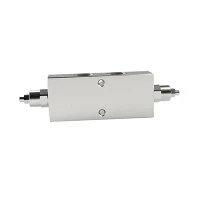
As a provider specializing in pressure check valves, I often get asked about the differences between ball - type and disc - type pressure check valves. In this blog, I'll break down these differences in a way that's easy to understand.
How They Work
Let's start with the basics: how these valves work. First up, the ball - type pressure check valve. As the name suggests, it uses a ball as the closing element. When the pressure on the inlet side is higher than the outlet side, the fluid pressure pushes the ball off its seat, allowing the fluid to flow through. Once the pressure on the outlet side exceeds the inlet pressure, the ball gets pushed back onto its seat, blocking the flow.
On the other hand, the disc - type pressure check valve uses a disc instead of a ball. The disc works in a similar way to the ball. When the inlet pressure is sufficient, it lifts the disc from its seat, and fluid can pass. Once the flow direction changes or the outlet pressure is higher, the disc returns to its seat, shutting off the flow.
Construction and Design
One of the most obvious differences lies in their construction. Ball - type check valves are generally simpler in design. The ball is a spherical object that can move freely within the valve body. This simplicity makes them easy to manufacture and often more cost - effective. They are also compact in size, which makes them a great choice when space is limited.
Disc - type check valves, however, have a more complex design. The disc needs to be properly seated and guided to ensure reliable operation. In some cases, additional components like springs or levers are used to aid the disc in closing and opening. This complexity can make them more expensive than ball - type valves, but it also offers some advantages.
Flow Characteristics
When it comes to flow, the two types of valves perform differently. Ball - type valves usually have a relatively low flow coefficient. The ball can create some obstruction to the flow, especially in smaller sizes. This can lead to higher pressure drops across the valve, which is something to consider in applications where maintaining a low pressure drop is crucial.
Disc - type check valves, on the other hand, often have better flow characteristics. The disc can be designed to offer less resistance to the flow, resulting in lower pressure drops. This makes them more suitable for applications that require a high - flow rate, such as large - scale industrial processes.
Sealing Performance
Sealing is a critical factor in pressure check valves. Ball - type check valves generally provide good sealing when the ball is properly seated on its seat. The spherical shape of the ball allows for a tight seal, which is effective in preventing backflow. However, they may not be as effective in sealing against viscous fluids or fluids with particles, as the ball can get stuck or damaged.
Disc - type check valves can offer excellent sealing performance, especially in applications where a tight seal is required. The disc can be made from different materials and can be designed to fit the seat precisely. Some disc - type valves are even suitable for high - pressure and high - temperature applications, providing reliable sealing under challenging conditions.


Response Time
The response time of a pressure check valve is important, as it determines how quickly the valve can react to changes in pressure. Ball - type check valves typically have a fast response time. The ball can move quickly between the open and closed positions, allowing for rapid shut - off when the pressure changes.
Disc - type check valves may have a slightly slower response time, especially in larger sizes or when additional components are used to guide the disc. However, modern disc - type valves are designed to have improved response times, and in many cases, they can still provide a satisfactory performance.
Application Examples
Ball - type pressure check valves are commonly used in applications where space is limited and cost is a concern. They are often found in small - scale plumbing systems, automotive applications, and some low - flow hydraulic systems. For example, in a car's fuel injection system, a ball - type check valve can prevent the backflow of fuel, ensuring a stable fuel supply.
Disc - type check valves are more commonly used in industrial applications where high - flow rates and reliable sealing are required. They can be found in water treatment plants, oil and gas pipelines, and large - scale hydraulic systems. For instance, in a water treatment plant, a disc - type check valve can prevent the backflow of treated water, maintaining the efficiency of the treatment process.
Choosing the Right Valve
So, how do you choose between a ball - type and a disc - type pressure check valve for your application? Consider the following factors:
- Flow Requirements: If you need a high - flow rate, a disc - type valve may be the better choice. But if flow rate is not a major concern and you're working with limited space, a ball - type valve could work fine.
- Pressure Drop: If minimizing pressure drop is crucial, opt for a disc - type valve, as they generally have better flow characteristics.
- Sealing Requirements: For applications where a tight seal is needed, especially under high - pressure or high - temperature conditions, a disc - type valve is often the way to go.
- Cost: If you're on a tight budget, a ball - type valve is usually more affordable.
As a pressure check valve supplier, we offer a wide range of both ball - type and disc - type pressure check valves. We also supply related products such as the Counterbalance Valve YKD, the Adjustable Flow Control Valve, and the Hydraulic Motor Control Valve Counterbalance Valve. These products can work in conjunction with our pressure check valves to meet your specific needs.
If you're interested in learning more about our products or are looking to purchase pressure check valves, don't hesitate to reach out. We can provide you with detailed product information, help you choose the right valve for your application, and offer competitive pricing.
References
- Fluid Power Engineering Handbook, Fourth Edition.
- Hydraulic Control Systems.
- Valves and Actuators for Process Industries.