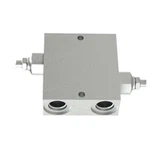
Hey there! As a supplier of Pilot Check Valves, I've seen firsthand the importance of having these valves operate at their peak efficiency. In this blog post, I'm gonna share some tips and tricks on how to improve the efficiency of a Pilot Check Valve, based on my years in the industry.
Understanding the Basics of a Pilot Check Valve
Before we dive into the ways to improve efficiency, let's quickly go over what a Pilot Check Valve is. A Pilot Check Valve is a type of valve that allows fluid to flow in one direction but can be unlocked to allow flow in the reverse direction when a pilot pressure is applied. These valves are commonly used in hydraulic systems to hold a load in place or to prevent backflow.
The efficiency of a Pilot Check Valve is crucial because it directly impacts the performance of the entire hydraulic system. If the valve isn't working efficiently, it can lead to issues such as slow operation, energy waste, and even system failures.
Select the Right Valve for the Job
One of the most important steps in improving the efficiency of a Pilot Check Valve is to choose the right valve for the specific application. Different applications have different requirements in terms of pressure, flow rate, and temperature.
For example, if you're dealing with a high - pressure system, you'll need a Pilot Check Valve that can handle that level of pressure. Using a valve that's not rated for the system pressure can lead to leaks, valve failure, and reduced efficiency. I always recommend doing a thorough analysis of your system's requirements before making a valve selection. You can also reach out to a valve expert to get some advice.
Proper Installation
Proper installation is key to ensuring the efficiency of a Pilot Check Valve. When installing the valve, make sure it's installed in the correct orientation. Installing the valve backwards can prevent it from working as intended.
Also, ensure that all the connections are tight. Loose connections can cause leaks, which not only reduce the efficiency of the valve but can also be a safety hazard. Use the right tools and follow the manufacturer's installation instructions carefully.
Another important aspect of installation is to make sure the valve is properly supported. In some cases, vibrations can affect the performance of the valve. By providing proper support, you can minimize the impact of vibrations and keep the valve operating smoothly.


Regular Maintenance
Regular maintenance is essential for keeping a Pilot Check Valve in top - notch condition. One of the most basic maintenance tasks is to check for leaks. Even a small leak can cause a significant reduction in efficiency over time. You can use a leak detection solution to check for leaks around the valve body and connections.
Cleaning the valve is also important. Over time, dirt, debris, and contaminants can accumulate inside the valve, which can affect its operation. You should follow the manufacturer's guidelines on how to clean the valve. In some cases, you may need to disassemble the valve to clean it thoroughly.
Inspecting the valve for wear and tear is another crucial maintenance step. Parts like seals and springs can wear out over time and need to be replaced. By catching and replacing worn parts early, you can prevent more serious problems from occurring.
Optimize the Pilot Pressure
The pilot pressure is an important factor in the operation of a Pilot Check Valve. Optimizing the pilot pressure can significantly improve the valve's efficiency. The correct pilot pressure is determined by the specific application and the design of the valve.
If the pilot pressure is too low, the valve may not open properly, which can restrict the flow and reduce efficiency. On the other hand, if the pilot pressure is too high, it can cause excessive wear on the valve components and may also lead to unnecessary energy consumption.
You can use pressure gauges to monitor the pilot pressure and make adjustments as needed. It's a good idea to consult the valve's manual or a valve expert to determine the optimal pilot pressure for your application.
Upgrade to Advanced Valve Technology
In recent years, there have been significant advancements in Pilot Check Valve technology. Upgrading to newer, more advanced valves can lead to improved efficiency.
For example, some modern Pilot Check Valves are designed with better sealing materials, which can reduce leaks and improve the overall performance of the valve. Others may have features like improved flow characteristics, which can reduce pressure drops and increase the flow rate.
If you're using older valves that are no longer performing as well as they should, it may be worth considering an upgrade. You can visit our website to check out our range of Relief Valve Pressure Control Valve, Relief Valve, and Buffer Valve, which incorporate the latest technology to ensure high efficiency.
Training and Education for Operators
Operators play a crucial role in the efficiency of a Pilot Check Valve. Providing proper training and education to the operators can help them use the valve correctly and identify potential issues early.
Training should cover topics like how to operate the valve, how to monitor the system for signs of problems, and what to do in case of an emergency. By having well - trained operators, you can ensure that the valve is used in the most efficient way possible and that any issues are addressed promptly.
Conclusion
Improving the efficiency of a Pilot Check Valve is a multi - faceted process that involves selecting the right valve, proper installation, regular maintenance, optimizing the pilot pressure, upgrading to advanced technology, and training operators. By following these tips, you can ensure that your Pilot Check Valve operates at its best, which will in turn improve the performance of your entire hydraulic system.
If you're interested in purchasing high - quality Pilot Check Valves or need more advice on improving valve efficiency, feel free to reach out. We're here to help you find the best solutions for your needs.
References
- Hydraulic Valve Handbook, Various Authors
- Industry Reports on Fluid Power Systems
- Manufacturer's Manuals for Pilot Check Valves