Hey there, folks! As a supplier of safety relief valves, I get asked a ton of questions about how these nifty devices work. One term that often comes up in these conversations is "blowdown." So, let's dig into what the blowdown of a safety relief valve actually is.
Understanding the Basics of a Safety Relief Valve
First off, let's have a quick refresher on safety relief valves. These valves are crucial components in many industrial systems, like boilers, pressure vessels, and pipelines. Their main job is to protect these systems from over - pressure situations. When the pressure inside the system exceeds a pre - set limit, the safety relief valve opens and releases some of the fluid (either gas or liquid) to bring the pressure back down to a safe level.
What is Blowdown?
Blowdown is the difference between the set pressure (the pressure at which the safety relief valve starts to open) and the reseating pressure (the pressure at which the valve closes again). For example, if a safety relief valve is set to open at 100 psi, and after it opens and releases some fluid, it closes at 90 psi, the blowdown is 10 psi.
Blowdown is usually expressed as a percentage of the set pressure. In our example, the blowdown percentage would be calculated as follows:
[Blowdown\ percentage=\frac{Set\ pressure - Reseating\ pressure}{Set\ pressure}\times100%]
[=\frac{100 - 90}{100}\times100% = 10%]
Why is Blowdown Important?
Blowdown plays a significant role in the operation of safety relief valves. A proper blowdown value ensures that the valve doesn't open and close too frequently, known as "chattering." Chattering can cause excessive wear and tear on the valve and may even lead to valve failure.
If the blowdown is too small, the valve might reseat too quickly, and then open again because the pressure hasn't dropped enough in the system. This constant opening and closing can damage the sealing surfaces of the valve and reduce its overall lifespan.
On the other hand, if the blowdown is too large, the system might experience a significant drop in pressure before the valve closes. This could disrupt the normal operation of the system or cause a negative impact on downstream processes.
Factors Affecting Blowdown
Several factors can influence the blowdown of a safety relief valve:
- Valve Design: Different valve designs have different blowdown characteristics. For example, a spring - loaded safety relief valve might have a different blowdown compared to a pilot - operated safety relief valve. The internal geometry of the valve, such as the shape of the disc and the seat, can also affect how the valve opens and closes, and thus the blowdown.
- Fluid Properties: The type of fluid flowing through the valve matters. If it's a gas, its compressibility can have an impact on the pressure changes during the opening and closing of the valve. Liquids, on the other hand, may have different flow characteristics that affect the blowdown. For instance, viscous liquids might cause the valve to operate differently compared to less viscous ones.
- System Conditions: The pressure and temperature variations in the system can influence blowdown. Fluctuations in system pressure can cause the valve to open and close at different pressures than expected. High temperatures can also affect the performance of the valve components, such as the spring, which in turn can change the blowdown.
Measuring and Adjusting Blowdown
Measuring the blowdown of a safety relief valve usually involves conducting a pressure test. During this test, the set pressure and the reseating pressure are recorded, and then the blowdown can be calculated.
Adjusting the blowdown can be a bit tricky and often requires some expertise. In some cases, it might involve changing the spring tension in a spring - loaded valve. However, this should only be done by trained professionals, as improper adjustment can lead to valve malfunctions.
Real - World Applications and Our Role as a Supplier
In real - world industrial applications, getting the right blowdown for safety relief valves is crucial for the smooth and safe operation of systems. For example, in a chemical processing plant, a well - adjusted safety relief valve with the right blowdown can prevent over - pressure situations that could lead to chemical spills or explosions.
As a safety relief valve supplier, we understand the importance of blowdown and its impact on system performance. That's why we offer high - quality valves that are designed and manufactured to provide consistent and reliable blowdown characteristics. We also provide technical support to our customers to help them select the right valve for their specific applications and ensure that the blowdown is properly adjusted.
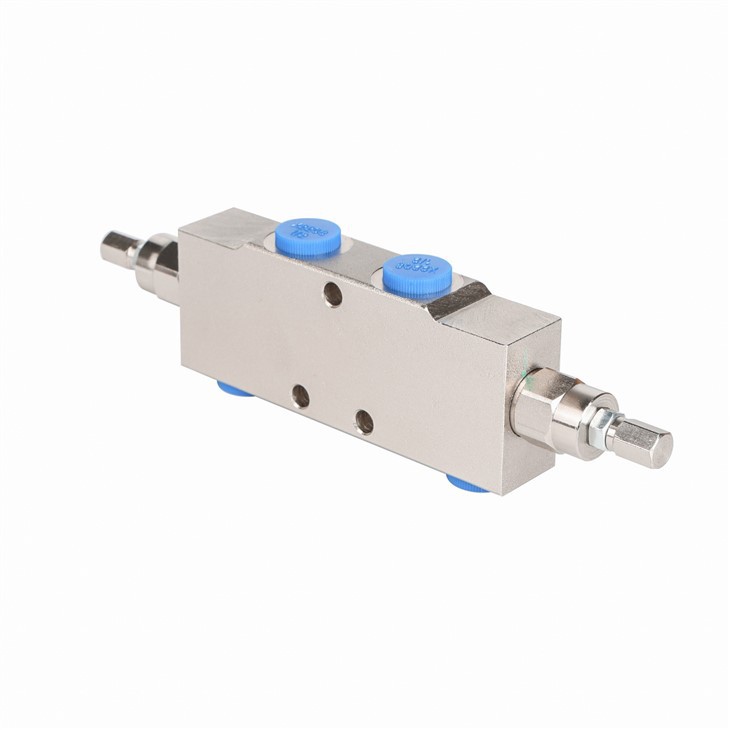

We also supply a range of related valves, such as the Hydraulic Motor Control Valve Counterbalance Valve, the Overcenter Balance Valve Hydraulic Valve For Hydraulic System, and the Hydraulic Cylinder Load Holding Valve. These valves work in harmony with safety relief valves to ensure the proper functioning of hydraulic systems.
Conclusion
So, to sum it up, blowdown is the difference between the set pressure and the reseating pressure of a safety relief valve. It's a crucial parameter that affects the valve's performance and the overall safety and efficiency of industrial systems. Whether you're in the chemical industry, power generation, or any other field that uses pressure systems, getting the right blowdown is essential.
If you're in the market for safety relief valves or any of the related valves we offer, don't hesitate to reach out. Our team of experts is always ready to help you find the best solutions for your needs. We can assist you with valve selection, installation, and adjustment to make sure your systems operate safely and smoothly.
References
- "Handbook of Pressure Vessel Design" by Dennis Moss and H. William Epstein
- "Safety Relief Valve Technology" by D. A. Palmer