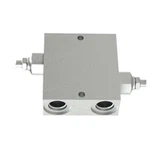
Hey there! As a pressure relief valve supplier, I get asked a lot about the differences between spring - loaded and weighted - lever pressure relief valves. So, I thought I'd break it down in this blog post.


Let's start with spring - loaded pressure relief valves. These are probably the most common type of pressure relief valves out there. They work based on a simple principle. Inside the valve, there's a spring that's set to a specific pre - load. When the pressure in the system exceeds this pre - set value, the force of the fluid overcomes the force of the spring. This causes the valve to open and release the excess pressure.
One of the big advantages of spring - loaded valves is their compact size. They can be easily installed in a wide variety of systems, from small hydraulic setups to large industrial pipelines. They're also pretty accurate when it comes to setting the relief pressure. You can adjust the spring tension to get the exact pressure at which the valve will open. This makes them great for applications where precise pressure control is crucial.
For example, in a manufacturing plant, if you have a hydraulic system powering some delicate machinery, a spring - loaded pressure relief valve can ensure that the pressure doesn't go too high and damage the equipment. And since they're relatively inexpensive to manufacture and maintain, they're a cost - effective choice for many industries.
But they're not without their drawbacks. Over time, the spring can fatigue, especially if the valve is exposed to high - frequency pressure fluctuations. This can lead to a change in the pre - set pressure, which means the valve might not open at the right time. Also, they're not very suitable for applications with extremely high pressures. The spring might not be able to handle the large forces required to keep the valve closed under such high - pressure conditions.
Now, let's talk about weighted - lever pressure relief valves. These valves operate using a lever and a weight. The weight is placed at a specific distance from the pivot point of the lever. The force exerted by the weight creates a moment that keeps the valve closed. When the pressure in the system increases to a level where the force of the fluid acting on the valve disc overcomes the moment created by the weight, the valve opens.
One major advantage of weighted - lever valves is their reliability. Since they don't rely on a spring that can fatigue, they can maintain a consistent relief pressure over a long period. They're also well - suited for high - pressure applications. The weight can be adjusted to handle very large forces, allowing the valve to work effectively in systems with extremely high pressures.
In some large - scale power plants or heavy - duty industrial processes where pressure can reach astronomical levels, weighted - lever valves are often the go - to choice. Another benefit is that they're relatively simple in design. There aren't many complex components, which makes them easier to understand and repair if something goes wrong.
However, weighted - lever valves also have their limitations. They're quite bulky compared to spring - loaded valves. The need for a lever and a weight means that they take up a lot of space. This can be a problem in applications where space is limited. They're also not as precise as spring - loaded valves when it comes to setting the relief pressure. Adjusting the weight and its position is a more manual and less accurate process compared to adjusting the tension of a spring.
So, how do you choose between the two? Well, it really depends on your specific application. If you need a valve for a system where space is limited and you require precise pressure control, a spring - loaded valve is probably your best bet. You can find a great range of options at our website, like the Double Way Hydraulic Control Valve Counterbalance Valve Supplier. It offers high - quality spring - loaded valves that can meet your needs.
On the other hand, if you're dealing with a high - pressure system where reliability over time is more important than precise pressure control and space isn't an issue, a weighted - lever valve might be the better choice. For weighted - lever valve solutions, you might check out Rexroth Counterbalance Valve Same Vbcd - system.
If you're working on a mini - excavator project or something similar, our Hot Sale Hydraulic Control Valve Balance Valve For Mini Excavator provides a great spring - loaded option that's both compact and efficient.
In conclusion, both spring - loaded and weighted - lever pressure relief valves have their own unique features and benefits. As a pressure relief valve supplier, we're here to help you make the right choice for your specific application. If you have any questions or if you're looking to purchase these valves, don't hesitate to reach out. We're ready to support you in finding the perfect pressure relief valve solution for your needs.
References
- "Handbook of Pressure - Relief Valves"
- "Industrial Valve Technology"
- Various technical documentation from valve manufacturers